November 15, 2008

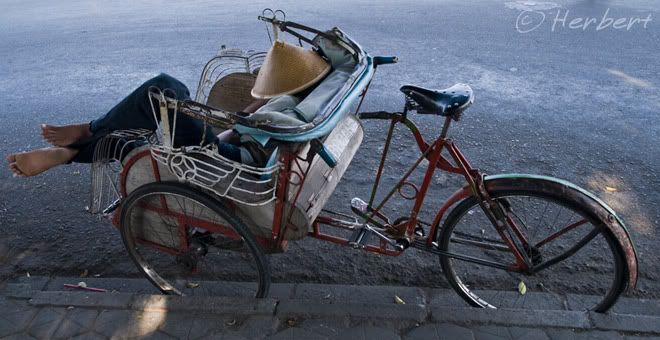
Taking a break on becak, Yogyakarta, Indonesia

Location: Yogyakarta, Central Java, Indonesia (7° 47′ 0″ S, 110° 22′ 0″ E)
Date: 23 July 2008; 3.20pm
Camera: Canon 400D with Sigma 17-70/f2.8-4.5

Becak or rickshaw is a common sight in some parts of Indonesia. There are everywhere in cities such as Yogyakarta where it is a major means of public transport. Sometimes I wonder if the city can sustain so many becaks as there are virtually everywhere one turns. No wonder a lot of the becak drivers just idle on the roadside either chatting or like this one, using his becak as a bed.

Technorati Tags: ,

Read More...

November 13, 2008

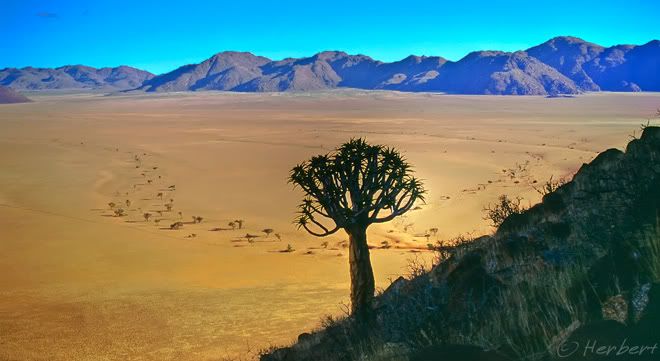
A lone quiver tree or kokerboom, Namib Desert

Location: Near NamibRand Nature Reserve, Namib Desert, Namibia (25° 2'8.68"S 16° 5'41.73"E)
Date: 14 April 2001; 4.25pm
Camera: (analogue) Canon 500N with slides and scanned
Quiver Trees  are also known as kokerboom, and are a species of aloe indigenous to South Africa, specifically in the Northern Cape region, and Namibia. Its name was derived from the common practice of the Kalahari San Bushmen of  hollowing out the tubular branches and bark to make quivers for their arrows.  These trees are very rugged and are among the very few plants that survive in the dry, avid desert.

Read More...

November 11, 2008

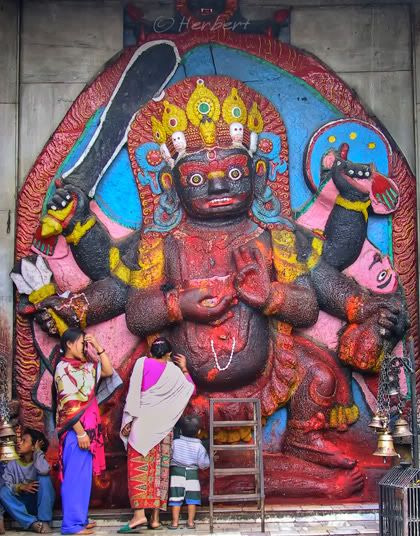
Bharirav, incarnation of Shiva, at Durbar Square, Kathmandu

Location: Durbar Square, Kathmandu, Nepal (27° 43′ 0″ N, 85° 22′ 0″ E)
Date: 30 April 2003; 5.40pm

Camera: Canon PowerShot G1

Bharirav is tone of the fierce incarnations of Shiva associated with annihilation.  He is one of the most important deities of Nepal, sacred to the Hindus and Buddhists. There is a Bhairirav statue in front of Durbar Square in Kathmandu. This sculpture  is almost 12 feet, standing on the corpse of a devil which is the symbol of evil spirit signifying "good overcoming bad". The statue was brought here by King Pratap Malla in the mid 17 century from Raniban, a forest nearby Kathmandu.

It used to be free for anyone to roam around Durbar Square; however that has now changed. There is now an entrance fee of 500 Rs to enter the Square. This is supposed to be for the upkeep of the Square but honestly I could not see any differences or improvements betwwen my visits in 2000 and 2003.

Read More...

November 9, 2008

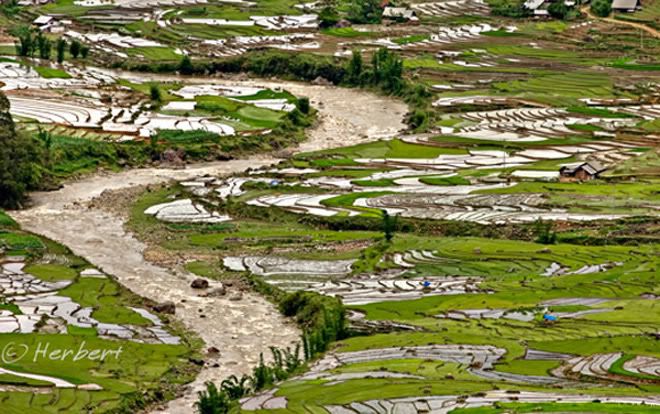
Rice Terraces along the Ta Van River at Sapa, Vietnam

Location: Sapa, Vietnam (22° 21′ 0″ N, 103° 52′ 0″ E)
Date: 4 June 2005; 2.45 pm
Camera: Canon 300D with kit lens

Sapa is one of the most popular tourist destinations in Vietnam. It is well-known for its ethnic variety and attractive rice terraces. Though the rice terraces are nowhere near as breathtaking as those in certain parts of China (such as Yuanyang in Yunnan or Longsheng in Guangxi) or Banaue in the Philippines, there are still relatively amazing to those who have not been to these other places.  There are many easy pleasant trails among the various villages around the rice terraces. Sapa today is actually a fairly touristy place with many eateries and souvenir shops catering to tourists but are exceptionally out-of-place in this ethnic-variety mountain town. Tourists who are keen to visit a destination with unique character and landscape but still want the familiarity of the food they enjoy, the shops selling stuff that they are used to in the cities will find Sapa very exciting. Purists who are interested in visiting a place for what it is will find this place over-developed and unauthentic. Sapa is close to the Vietnam-China border and so is easy to crossover from China. Border crossing is easy at Lao Chai.

Technorati Tags: ,

Read More...

November 7, 2008

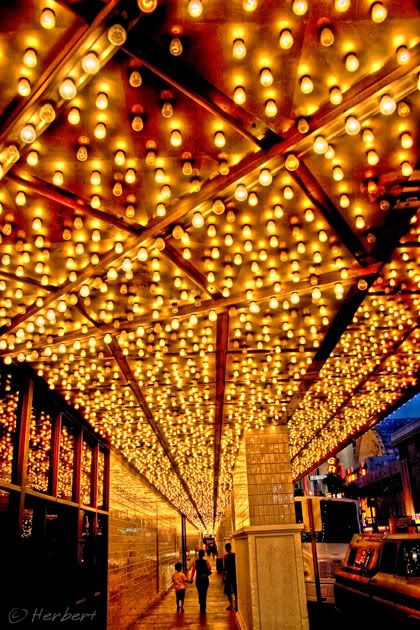
Glittering Lights of Vegas

Location: Plaza Casino, Las Vegas, Nevada, USA (36°10'17"N 115°8'50"W)
Date: 10 September 2006; 6.15pm
Camera: Canon 300D with kit lens

Las Vegas is like a city of lights- neon's and all sorts of lights everywhere. This city must be consuming a tremendous amount of electricity, just for the lights outside all the casinos and resorts. Vegas is not as sleazy and crime-ridden as it used to be. Apparently it has transformed itself into a top family and convention destination. Apart from all the free shows and displays at the various casinos, what I like most is the casual dress code standard. One can go into any of the casinos wearing just a pair of shorts and singlet/tank top; unlike most of the casinos in Asia where a certain minimum standard of dress code- casual smart meaning longs with shoes etc- is required for entrance.

Read More...

November 5, 2008

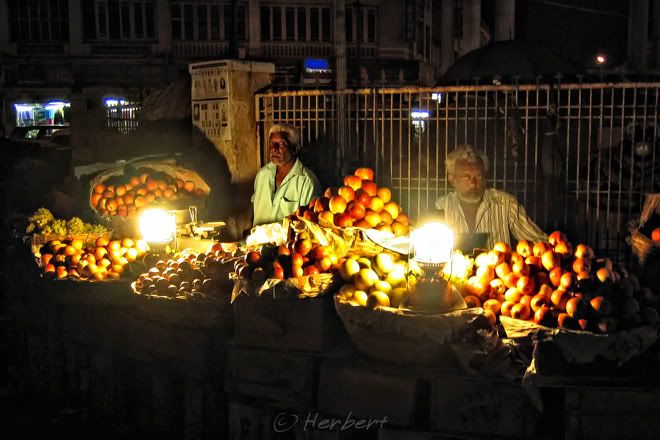
Night market at Devaraja, Mysore, India

Location: Devaraja fruit and vege market, Mysore, Karnataka, India (12° 18′ 0″ N, 76° 39′ 0″ E)
Date: 2 December 2005 6.35pm
Camera: Canon Ixus IZoom

Mysore is a delightful city, though not as glamorous and developed as its neighbour, Bangalore. It still retains a lot of old charms such as the Devaraja Fruit and Vege Market. The market is a colourful and fun place to visit during the day and the activities extend into the night as well. These fruit sellers definitely do not differentiate between day and night.

Technorati Tags: ,

Read More...

November 2, 2008

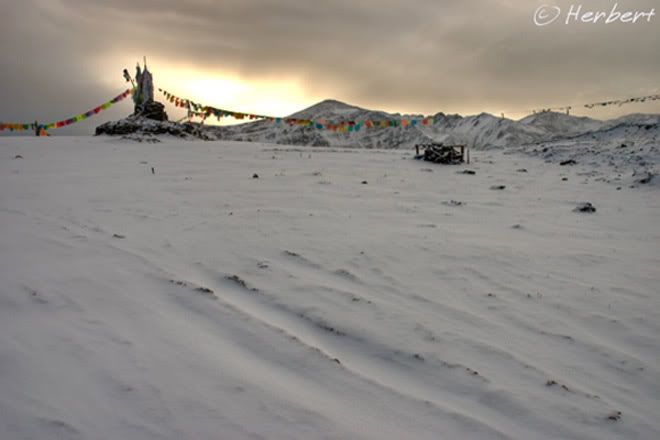
Misty morning at Tsemi Pass to Mount Gonga, Sichuan

Location: At Tsemi Pass子梅山埡口 4440m, Sichuan China (29°31'3.49"N 101°43'13.67"E)
Date: 25 October 2006, 7.45am
Camera: Canon 400D with Sigma 17-70/f2.8-4.5

There are a several routes to the fabulously located Gongga Monastery (3,860m) at the foot of the Gongga Glacier below Mount Minya Gongga 贡嘎山, which is the highest mountain in Sichuan. At 7,556m the mountain is also the easternmost 7,000m peak in the world and the third highest peak outside of the Himalaya/Karakoram ranges. On the southwest approach, one has to cross the Tsemi Pass (4,440m) on the way to the monastery. The view of the triple peaks Minya Gongga is supposedly best viewed from this very windy pass. However the weather here is notoriously cloudy and foggy and one has to be rather lucky to have a panoramic view of the mountain from here. A typical morning view across the pass is like this photo- eerily quiet and cloudy. As this area is populated mainly by Tibetans, the pass is customarily decked with prayer flags as is the norm at most high vantage points and sacred locations. 

Read More...